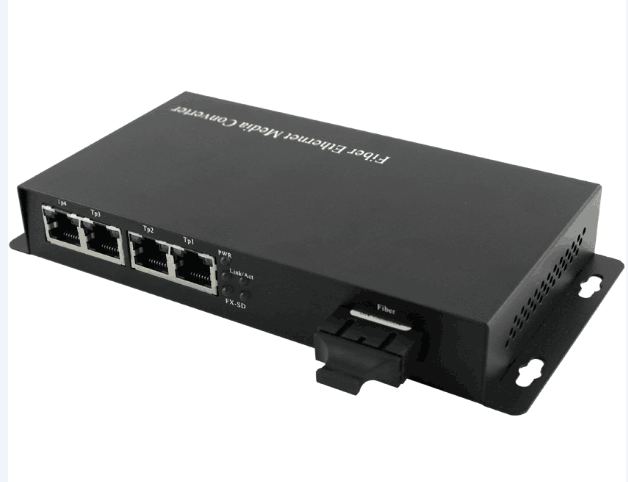
RJ45 Fiber Switch/Fiber Channel switch
A fiber switch is a telecommunication device that receives a message from any device connected to it and then transmits the message only to the device for which the message was
meant. This makes the fiber optic switch a more intelligent device than a hub (which
receives a message and then transmits it to all the other devices on its network). The fiber Ethernet switch plays an integral part in most modern Ethernet local area networks (LANs). Mid-to-large sized LANs contain a number of linked managed switches.
A fiber Ethernet switch operates at the data link layer of the OSI model to create a separate collision domain for each switch port. With 4 computers (e.g., A, B, C, and D) on 4 switch
ports, any pair (e.g. A and B) can transfer data back and forth while the other pair (e.g. C and D) also do so simultaneously, and the two conversations will not interfere with one anothe. In full duplex mode, these pairs can also overlap (e.g. A transmits to B, simultaneously B to C, and so on). In the case of a repeater hub, they would all share the bandwidth and run in half duplex, resulting in collisions, which would then necessitate retransmission.
Read More